Antibiotic Resistance in Marine and Coastal Environments: A Systematic Review
Zubair AA *
PG and Research Department of Aquaculture and Fishery Microbiology, MES Ponnani College, Ponnani South, Malappuram, Kerala, India.
*Author to whom correspondence should be addressed.
Abstract
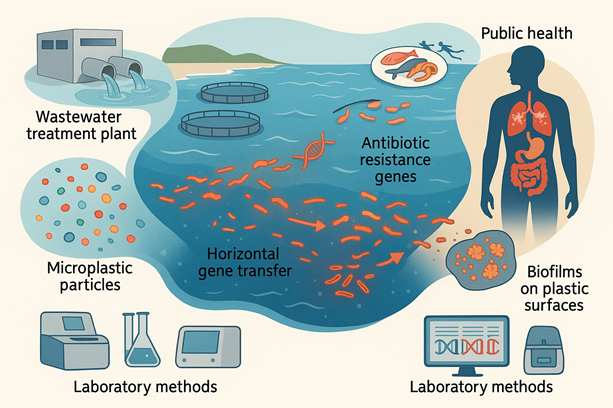
Antibiotic resistance (AR) dissemination in marine and coastal environments is recognized as a major and growing threat for ecological equilibrium and human health. These aquatic environments, once considered relatively pristine, are now recognized as major reservoirs of antibiotic resistance genes (ARGs) and antibiotic-resistant bacteria (ARB). This review integrates research from 2010 to 2025 in order to give a full picture of the current understanding of this fundamental issue. The current study examined the major contributors to antimicrobial resistance, including effluent from wastewater treatment plants, agricultural and aquaculture runoff, and widespread plastic pollution. Together, these sources create strong environmental pressures that promote the spread of resistance. The paper connects the basic principles of resistance dissemination with horizontal gene transfer (HGT) mediated by mobile genetic elements (MGEs) in microbial communities, particularly within biofilms. The study also delves into the important environmental pressures including climate change and pollution gradients that intensify the selection of ARGs and contribute to their spread. The public health implications are described in the context of the One Health approach, taking into account both exposure via consumption of contaminated seafood and recreational water activities. The article also describes the techniques used to monitor and detect resistant organisms in marine systems, starting from simple culture-based methods and extending to advanced molecular tools such as quantitative PCR and metagenomics. The overall evidence shows that marine and coastal environments have become significant reservoirs of antibiotic resistance, driven by human activities and intensified by climate and pollution pressures. The article highlights the intricate relationships between anthropogenic pressures, microbial evolution and antibiotic resistance in the marine environment and emphasizes the pressing need for coordinated global mitigation measures
GRAPHICAL ABSTRACT
Keywords: Antibiotic resistance, antibiotic resistance genes (ARGs), horizontal gene transfer (HGT), marine environment, microplastics, one health, wastewater